
Product Design
Design Systems
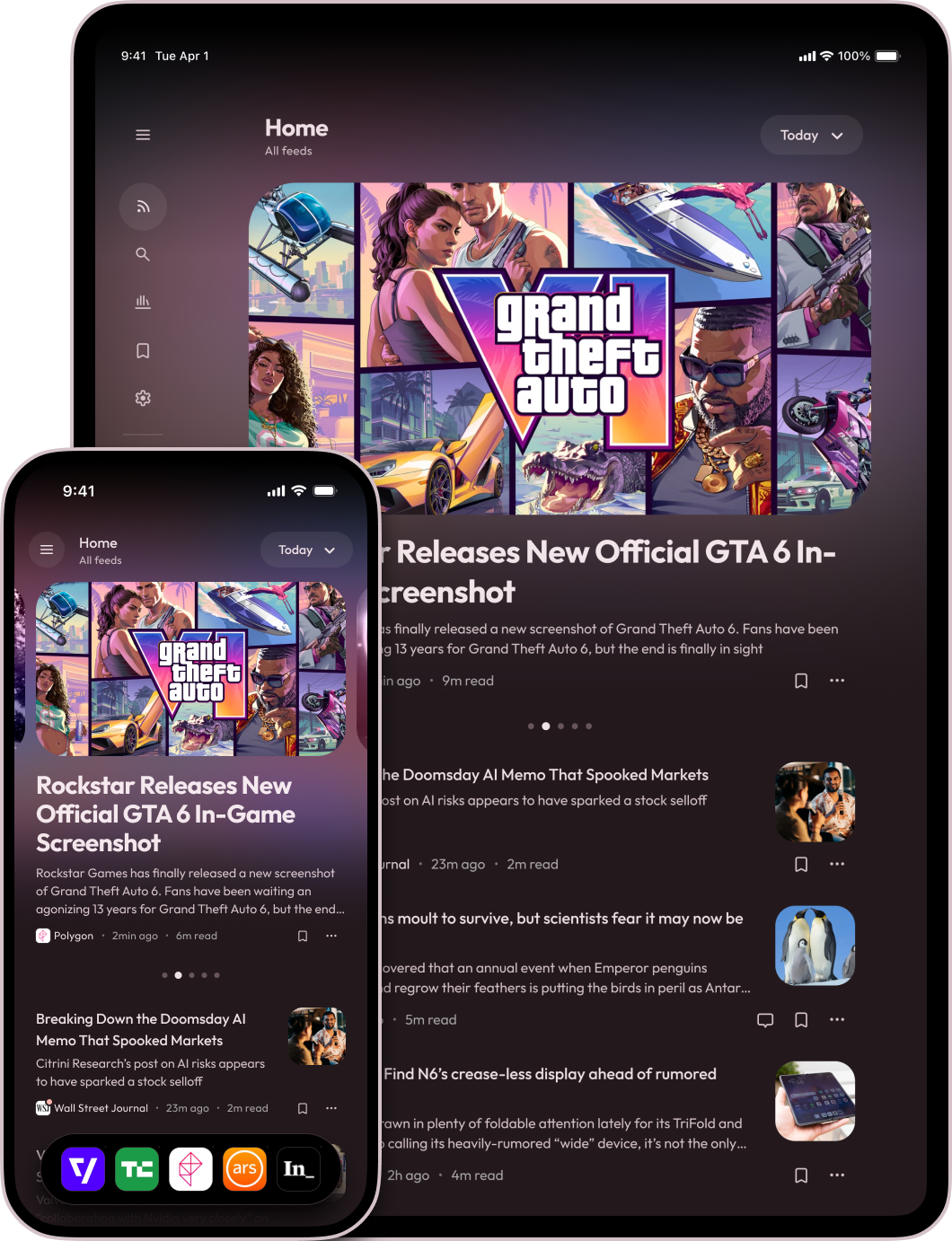
Twine started out as an open-source application.
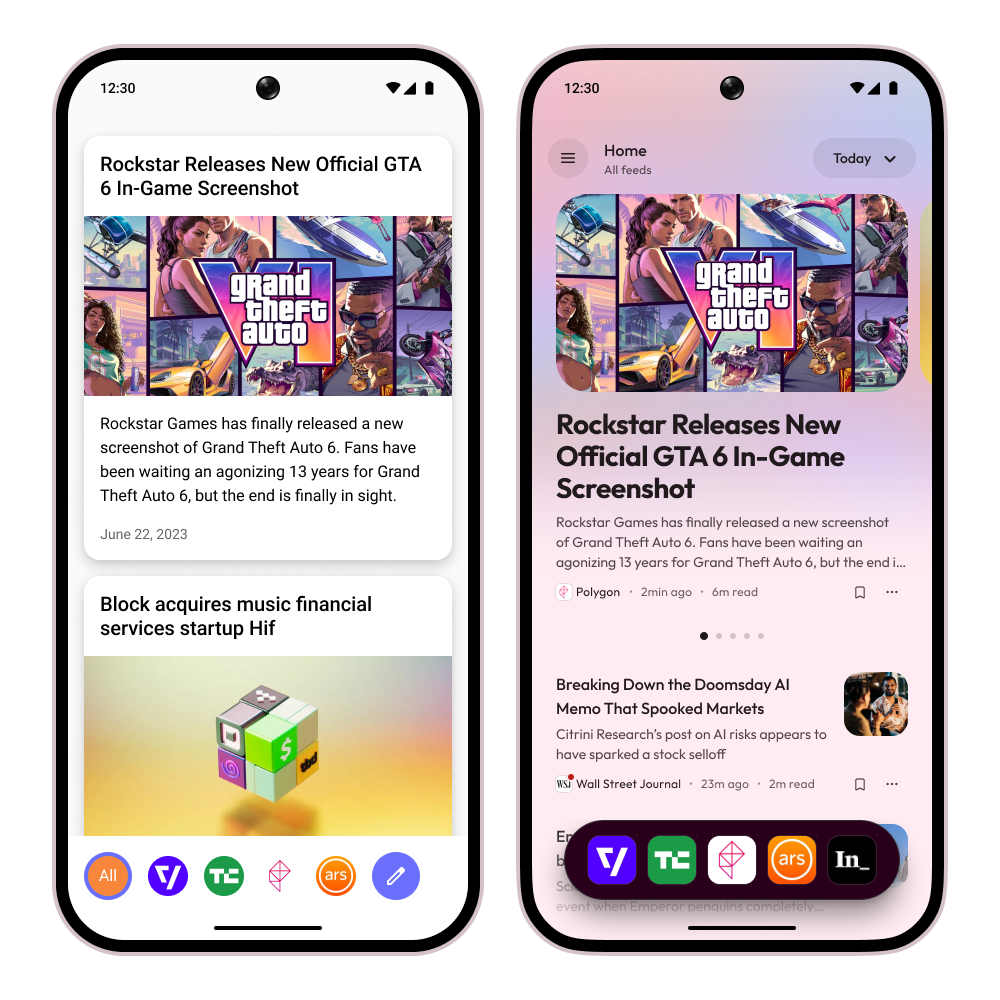
Comparison between the open-source Android-only version and Twine.
The idea was to take this open-source application and take its design to the next level. Initially, there was zero regard for functionality; it was simply a test to see how much fun we could have by integrating the content into the design process and coordinate it to theme the entire app.
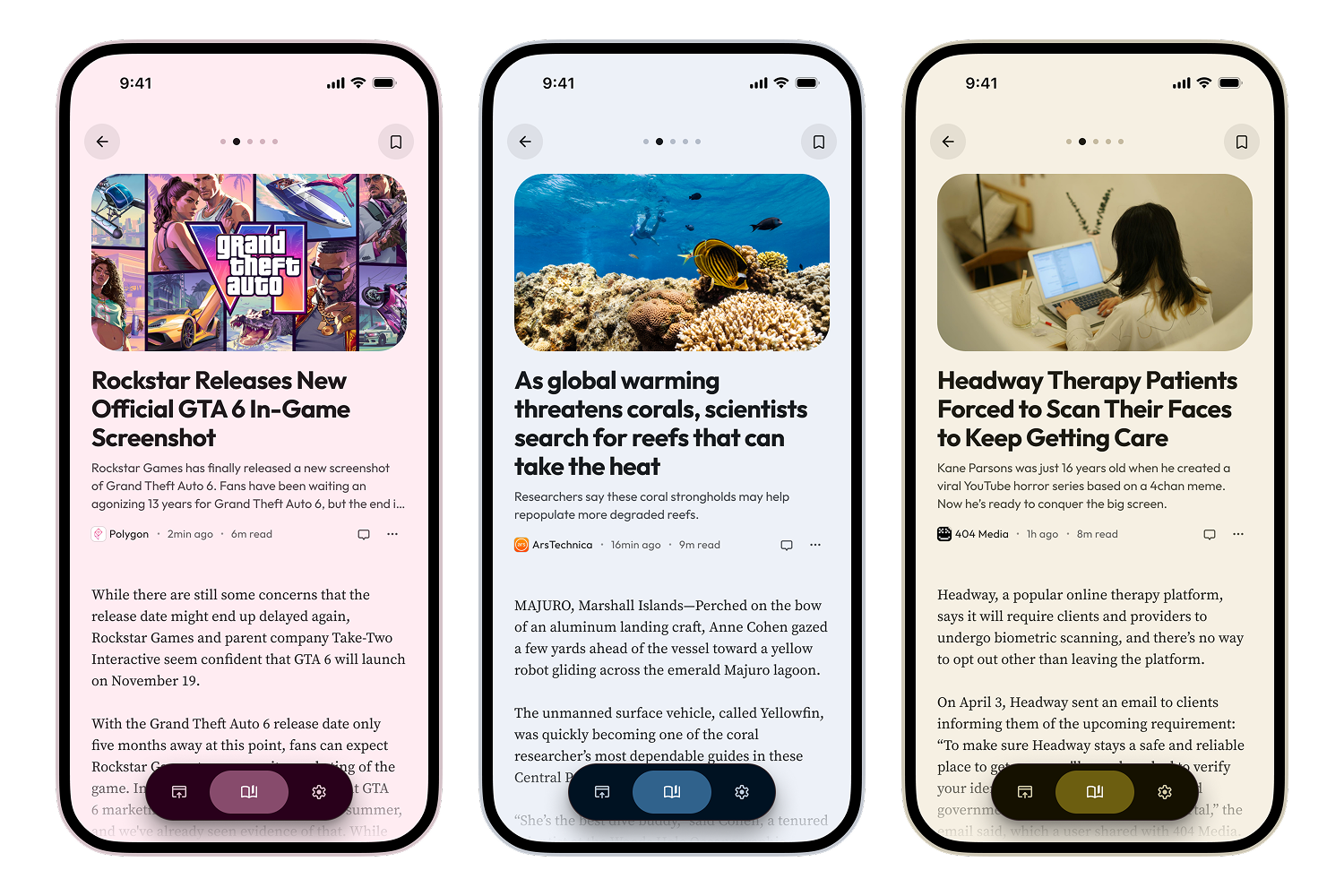
Twine extracts color from article images.
Twine provides color mappings for all surfaces of the app based on a single image. This happens dynamically, meaning scrolling to a different article or refreshing the app causes it to smoothly transition between themes.
The end user experience was difficult to make performant, but it was worth the effort. Each article contains a little bit of personality that bleeds into the page, and the tint feels subtle enough that it counts as a flourish rather than something calling attention onto itself.
When to pull back, and trust the user
Twine’s defining idea wasn’t a one-size fits all. We knew that we had a beautiful app in our hands, but our theming structure lended itself to more customization options. We then allowed users to pick custom themes and their own preferred homescreen layout.
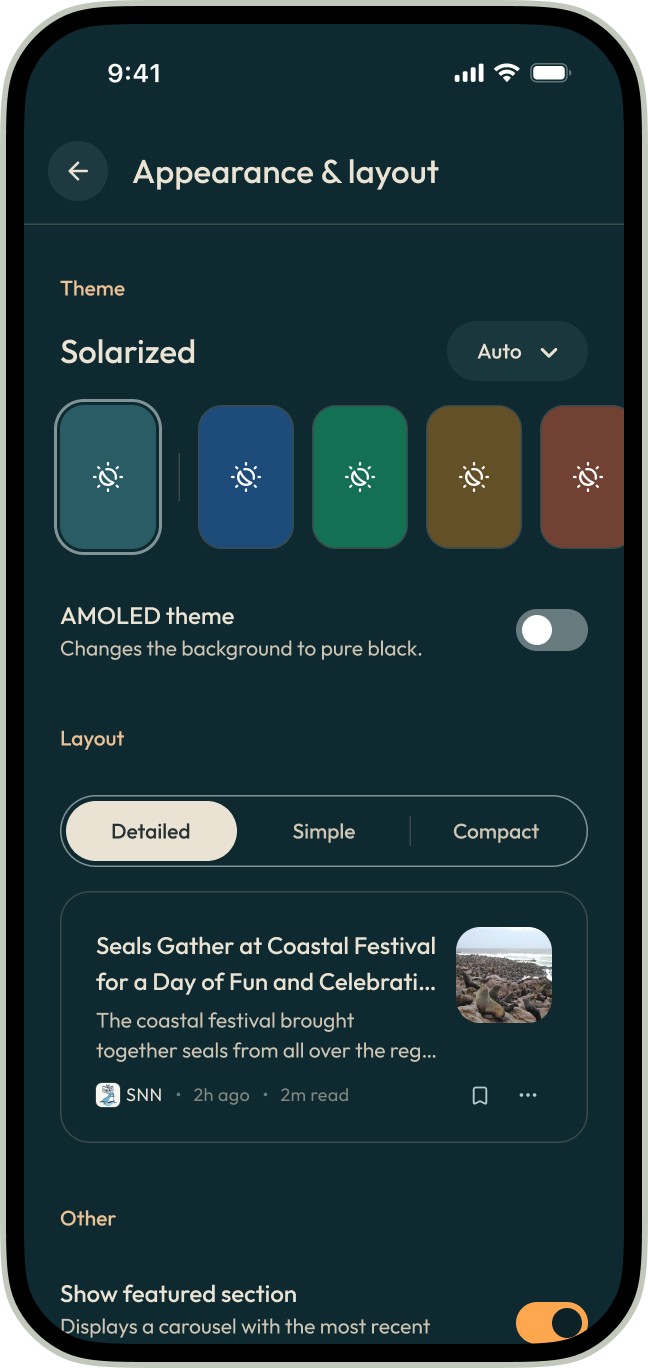
Twine’s appearance settings allow for greater customization.
Twine remains a great choice for those looking for a unique RSS reading experience. While it may not feature all the bells and whistles from more mature readers, it strives for something different and succeeds at it.
Twine is currently available on both Android and iOS devices.